Founded in 2007 by CEO and Senior Colourist Thomas Urbye, The Look is one of the UK’s most respected picture post-production facilities. From its London base, with a facility in Cardiff, The Look supports high-end film and television productions across grading, online, deliverables and QC.
Its workflows regularly involve 6K and 8K source material, EXR and TIFF image sequences, multiple finishing systems and large volumes of data moving between internal teams and external VFX partners. As those demands have grown, so has the need for storage that can deliver the performance, concurrency and reliability to keep complex post-production workflows moving.
For Mark Maltby, The Look’s Chief Technology Officer and Director of Online, and the wider technical team, storage needs to do more than simply hold media. It needs to keep up with the pace and demands of the work happening around it. Having joined The Look in 2009, Mark has progressed from online editor to technical lead, bringing an engineering background in automotive and telecoms.
At a glance
- Real-time export of uncompressed TIFF image sequences
- Over half a petabyte of all-NVMe storage in 2U, down from half a rack
- Eight power supplies across two systems consolidated into one dual-PSU system, cutting power and cooling
- Two Transkoders, up to six Flames and six to eight Resolve workstations all working from the same storage at once
- IMF updates turned around in hours rather than days with a supplementary patch and CPL workflow
Engineered for high-resolution workflows
At The Look, media moves through a complex chain of ingest, conform, grading, finishing, QC and delivery. Content is typically conformed in DaVinci Resolve, processed to EXR, graded and finished before being exported to BOLT as a glass master: a TIFF or EXR image sequence that gives maximum flexibility at QC. Final delivery is handled via Aspera and the Netflix, Sky and Amazon portals.
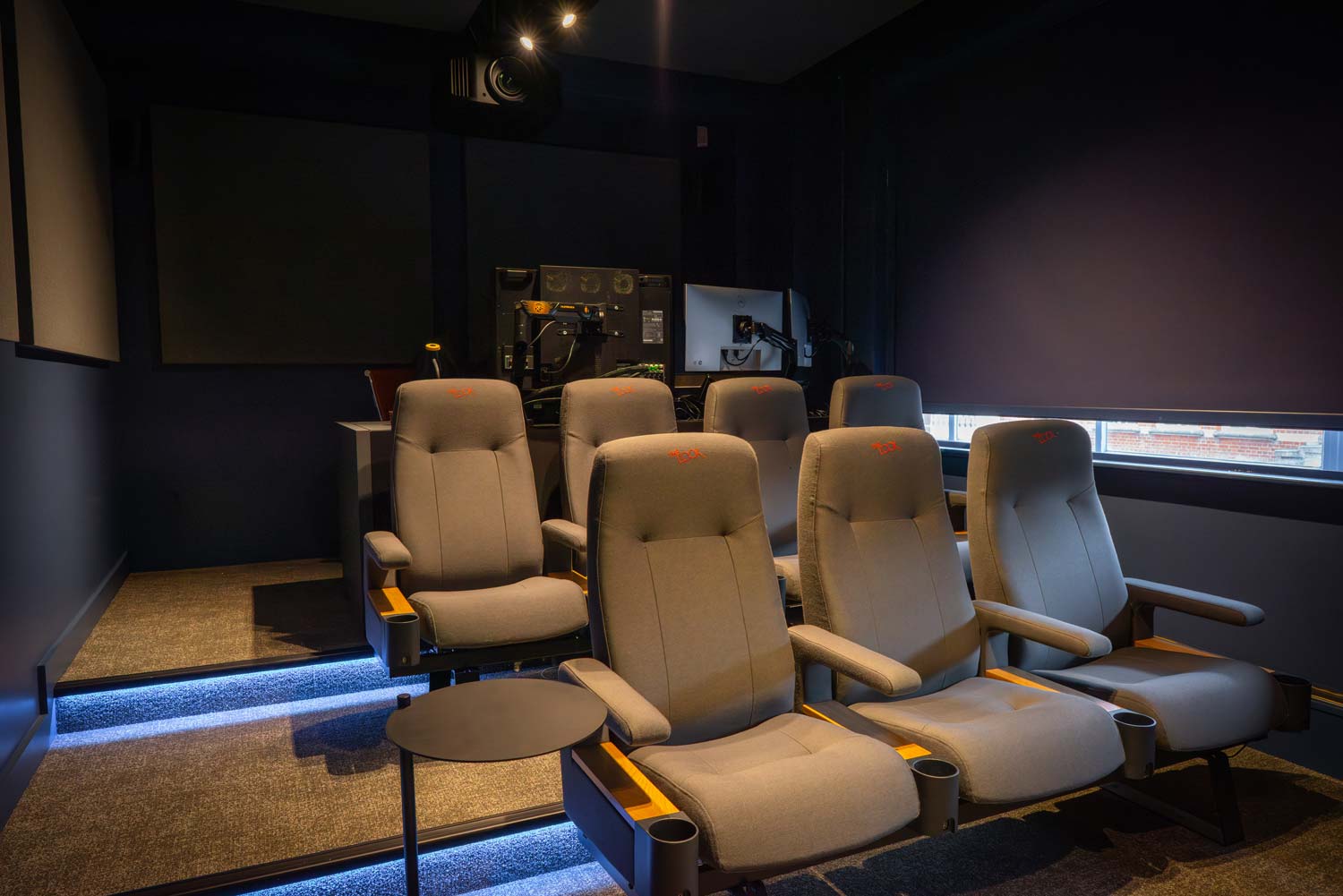
Concurrent read and write is critical: creating an IMF means reading from and writing back to BOLT at the same time.
“We can have six streams of uncompressed 4K TIFF or zipped EXR read and write, with VFX vendors uploading and downloading at the same time,” says Mark. “Then you’ve got two Transkoders and multiple Flames and Resolve workstations.”
An upgrade built for what’s next
After around seven years using two ELEMENTS ONE 60-bay units, The Look upgraded to its current all-NVMe ELEMENTS BOLT 600 system, gaining significantly more capacity and performance while dramatically reducing its physical footprint.
The previous storage occupied around half a rack. The new system delivers over half a petabyte in just 2U, while supporting more concurrent workflows. It also delivers a significant power saving: where the two ELEMENTS ONE units relied on four power supplies each – eight in total – BOLT runs on a single dual-PSU chassis, cutting power draw and the associated cooling load.
For us, a major benefit of the ELEMENTS storage is that it sits in the background, and we don’t really hear a peep out of it. It’s just there, working away, and people use it.
Mark Maltby, Chief Technology Officer and Director of Online, The Look
Data-centre storage that feels local
The Look’s BOLT system is housed in a co-located data centre, with the facility’s central London suites connected over dark fibre. Workstations access the storage through ELEMENTS BLINK, a block-level client designed to deliver low-latency performance over the IP network, much like locally connected storage.
Real-time delivery
One of the biggest practical benefits has been the ability to work with image sequences at much higher speeds. Previously, exporting an image sequence to a separate third-party spinning-disk NAS over 10GbE, then copying it to an external hard drive over FireWire for delivery, could take around seven hours. With BOLT, The Look can export uncompressed TIFF image sequences in real time, meaning a one-hour programme can be exported in less than an hour. That extra speed can make same-night delivery possible when deadlines are tight.
Technology changes and client expectations change with it. You might get something at seven or eight o’clock at night, and the client wants it back that evening. Previously, you might have had to say, ‘that’s going to be tomorrow’.
Mark Maltby, Chief Technology Officer and Director of Online, The Look
The same applies when changes are required. Rather than rebuilding and reprocessing an entire master, The Look can deliver a supplementary patch with a CPL for IMF updates. A scene cut that might previously have involved a much longer reprocessing cycle can now be turned around in hours rather than days.
Support from people who understand the workflow
When support is needed, being able to speak directly to people who understand The Look’s environment makes a real difference. Rather than dealing with a generic support desk, Mark and his team have a direct relationship with the people behind the technology, something that’s particularly valuable when deadlines are tight. Support is typically responsive within around an hour, with issues resolved within 24 hours. The hardware has proved just as dependable, with no disk failures since installation.
That same understanding is reflected in the product itself, from high-bandwidth storage and concurrent workloads to the practical realities of moving finished work through delivery.
For The Look, it’s that combination of dependable technology and knowledgeable support that makes ELEMENTS a long-term fit.
Looking ahead
The demands on post-production are continuing to change. Work is becoming more distributed, with external vendors, cloud workspaces, S3 storage and more modular production workflows increasingly becoming part of the picture. This makes flexibility and automation more important as workflows evolve.
For The Look’s technology team, modularisation is a key part of that future: dividing different stages of the process between internal teams, external vendors, storage and processing, then bringing everything back together as needed. Automation will also play a bigger role, helping reduce repetitive tasks and identify where people can spend their time more effectively.
AI is likely to support that shift, not by replacing creative or technical expertise, but by helping connect systems, identify bottlenecks and remove inefficiencies from increasingly complex workflows.
For The Look, the aim is straightforward: keep the workflow moving, make better use of the people and technology already in place, and have the flexibility to adapt as the industry changes.
ELEMENTS is a product provided by a team that understands what you do and what you need it to do.
Mark Maltby, Chief Technology Officer and Director of Online, The Look