The gold-standard NLE, Avid Media Composer, has received another update. The latest version, 2025.12, introduces several noteworthy enhancements, including those to the Transcript tool, a waveform map in the Source Monitor, the ability to import markers directly into source clips, including those created in our integrated media asset manager ELEMENTS Media Library, and much more.
Alongside this release, a brand-new Editing Guide has been published. Spanning 1,317 pages across 38 chapters, it provides an extensive reference for editors. While the chapters are not listed individually in the table of contents, we have done the work of navigating the document and linking each chapter to make it easier for you to find the sections you need.
Documentation Chapters
Chapter 1 Editing Overview
Chapter 2 Getting Started
Chapter 3 Working with Projects
Chapter 4 Windows and Panels in the User Interface
Chapter 5 Using Tools
Chapter 6 Logging
Chapter 7 Preparing for Capture
Chapter 8 Capturing Media
Chapter 9 Importing Files
Chapter 10 Working with Bins
Chapter 11 Linking File-Based Media
Chapter 12 Managing Media Files
Chapter 13 Viewing and Marking Footage
Chapter 14 PhraseFind
Chapter 15 Creating and Editing Sequences
Chapter 16 Working with Proxy Media
Chapter 17 Working with High-Resolution Media
Chapter 18 Script-Based Editing with ScriptSync AI
Chapter 19 Using the Timeline
Chapter 20 Working with Trim Edits
Chapter 21 Working with Audio
Chapter 22 Using External Audio Devices
Chapter 23 Using Avid Media Controllers
Chapter 24 Using Audio Plug-Ins
Chapter 25 Exporting Frames, Clips, or Sequences
Chapter 26 Generating Output
Chapter 27 Conforming and Transferring Projects
Chapter 28 Using the NRCS Tool (Media Composer | News Option)
Chapter 29 Working with MediaCentral | Production Management
Chapter 30 Using MediaCentral Transfer to Export Media
Chapter 31 Using MultiRez and Dynamic Relink
Chapter 32 MultiCamera Editing
Chapter 33 Using and Understanding Settings
Chapter 34 File Format Specifications
Chapter 35 Project Formats and Resolutions
Chapter 36 Working in HD and High-Resolution Projects
Chapter 37 International Character Support (ICS) in Avid Editing Applications
Chapter 38 Open I/O Support
Read the full Media Composer 2025.x Editing Guide
Avid and ELEMENTS
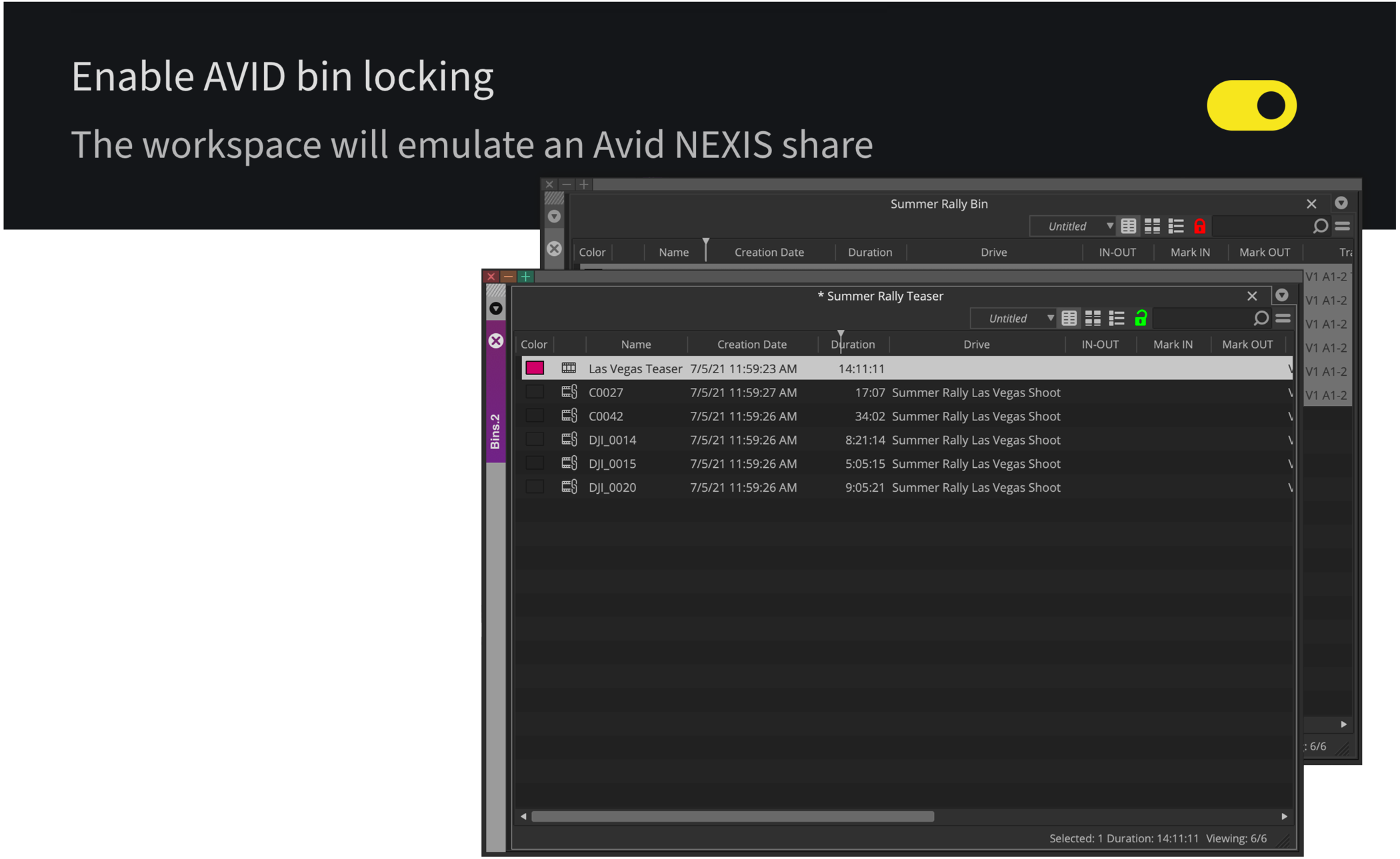
All ELEMENTS systems provide native and seamless Avid Bin Locking support, requiring only a single menu press to activate on any workspace on the storage. Thus, ELEMENTS enables the powerful project-sharing and team collaboration capabilities of Avid Media Composer. Read all about the ELEMENTS’ support for Avid workflows.
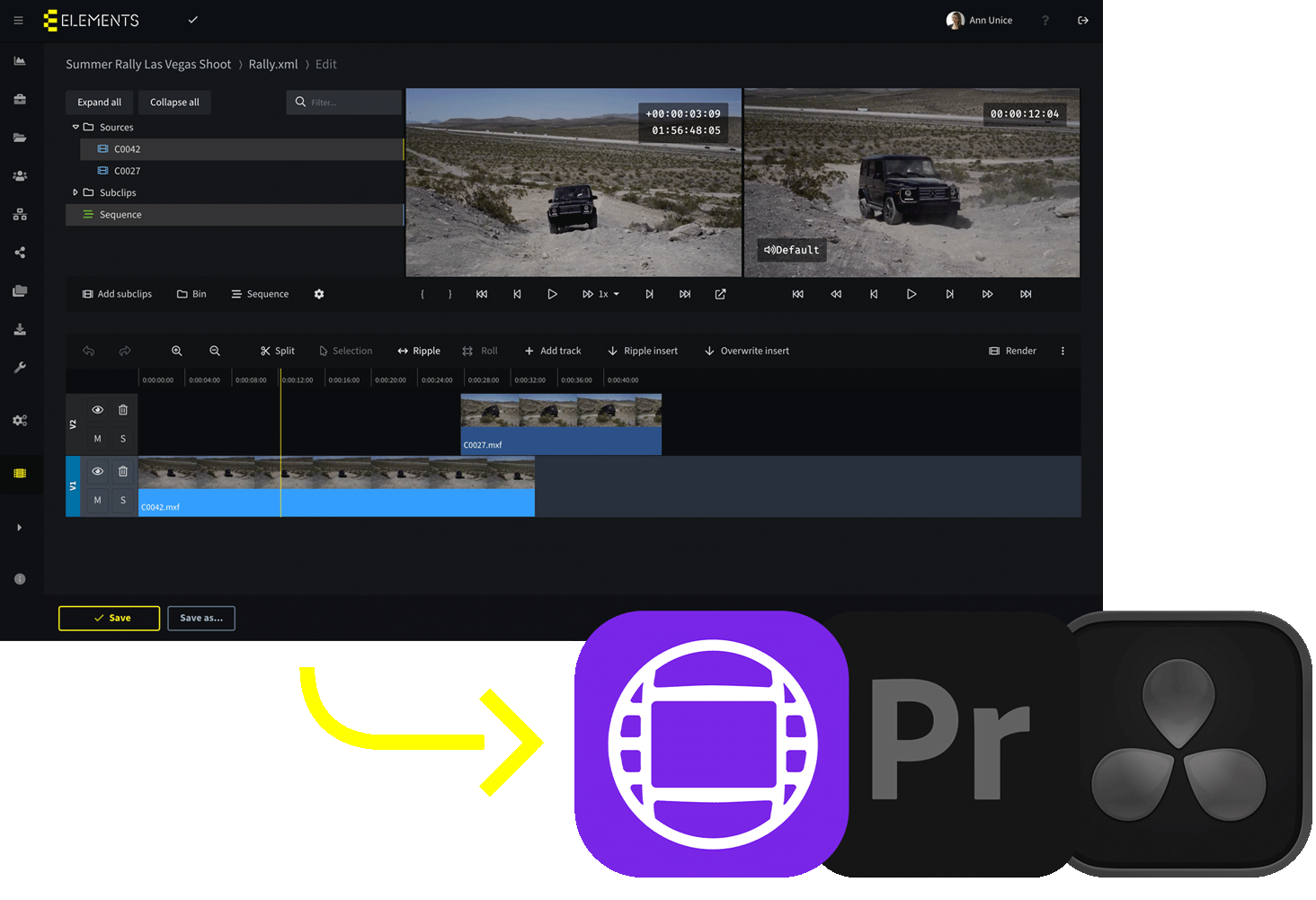
The ELEMENTS Media Library is a Media Asset Management platform that visualises the content on your storage and provides an unrivalled collaboration environment for your entire team. Users can easily find the content they need and play, tag, comment and annotate clips. In addition, users can edit multi-track sequences in a web browser and easily import these into Avid Media Composer via AAF or an EDL. The ELEMENTS Media Library enables all of your staff to collaborate for review and approval tasks without the need for costly per-user licenses or annual subscriptions.
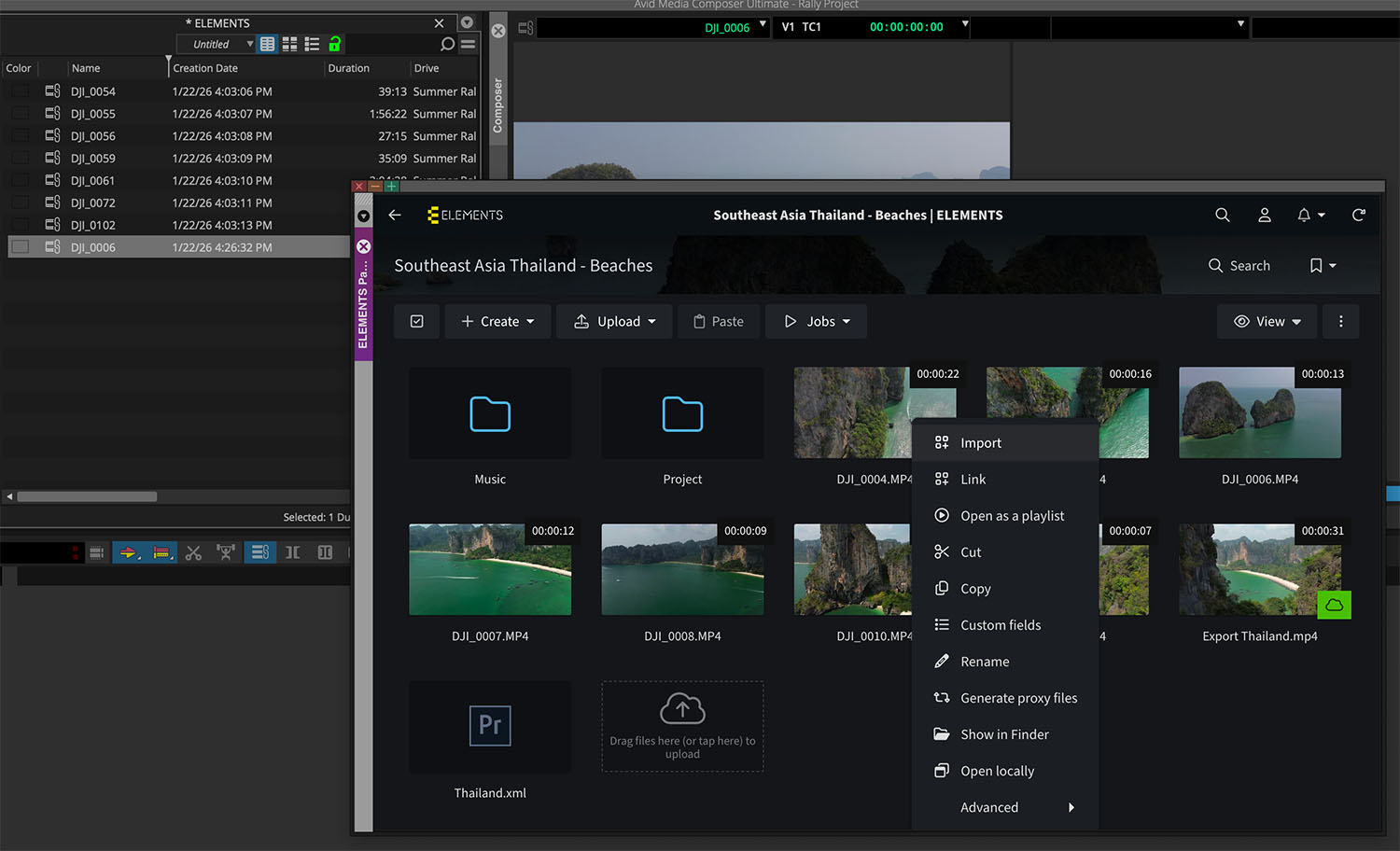
You can now also access the Media Library directly from within Avid Media Composer through a feature-rich panel integration. This panel allows users to easily preview all footage stored on your ELEMENTS system before importing or linking it with a single mouse click. In addition, the panel provides full access to Media Library collaboration features, including adding comments, assigning tasks, using the powerful search function to find the right footage, and triggering automation jobs created in the Automation Engine.