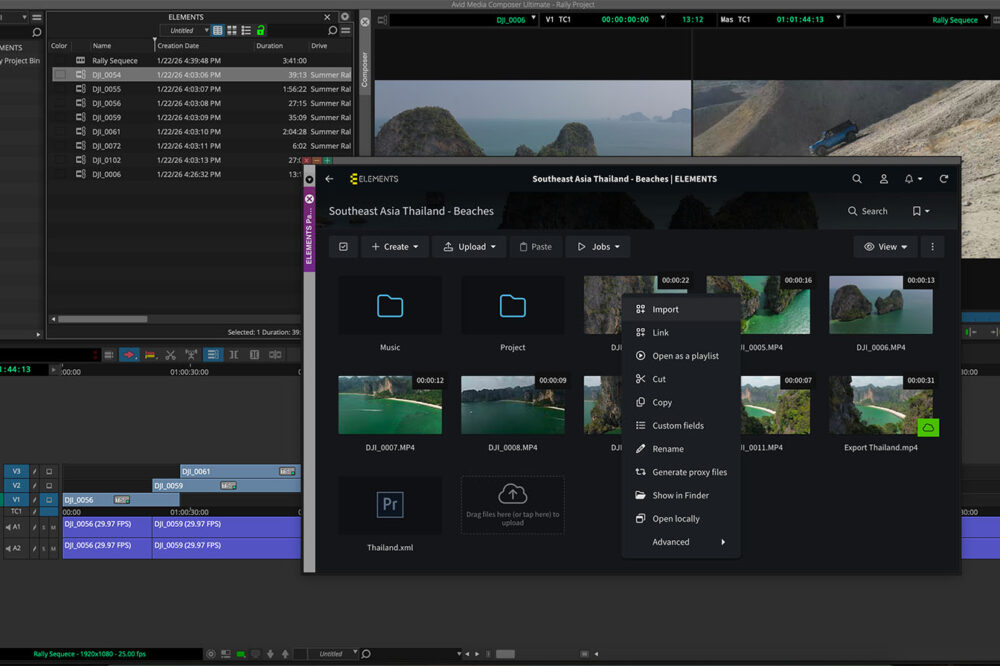
What VALET does
VALET is the project parking system built into ELEMENTS. It continuously mirrors active workspaces to secondary storage (typically cloud) then lets you remove them from your editing storage with a single click. When a project needs to come back, one click restores it completely: same workspace, same permissions, same media references. Open your editing project and continue where you left off. No path rewriting. No relinking. No coordination with IT.
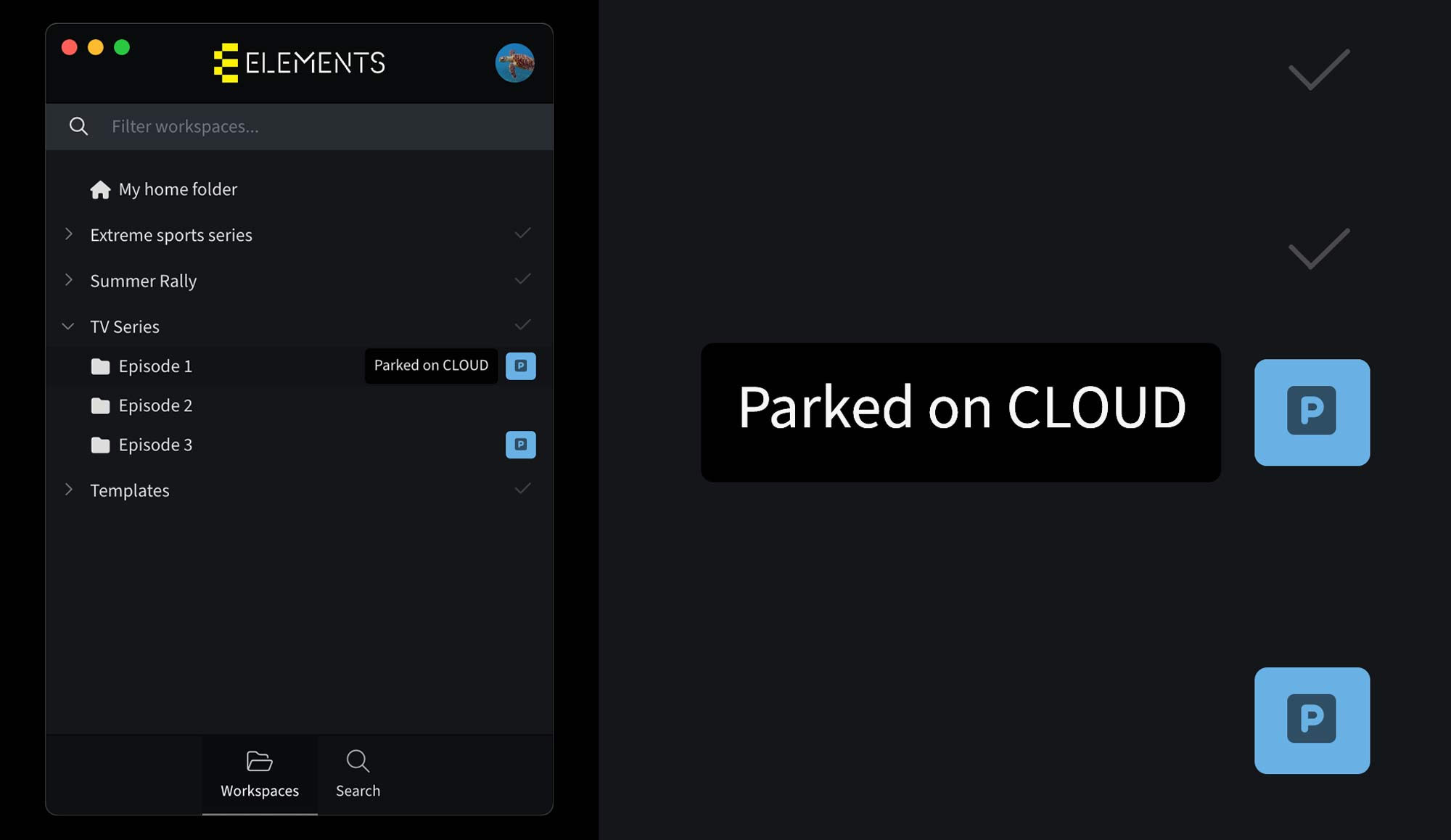
The distinction that matters: VALET parks projects, not files. A parked workspace is a deliberate, reversible state you choose and not a background heuristic guessing what to move. While it’s parked, the project stays a first-class object inside ELEMENTS: proxies browsable, metadata searchable, permissions intact.
The storage problem every facility knows
High-performance shared storage costs what it costs because active productions demand low latency, high throughput, and simultaneous multi-editor access. That cost makes sense while a project is in production.
After delivery, the same expensive capacity sits occupied by files nobody is touching. The storage fills up. At some point the choice becomes: delete something, buy more fast storage, or spend a Friday afternoon manually moving projects to a NAS somewhere and hoping everyone remembers where they ended up. VALET removes that choice from the equation.
How it works
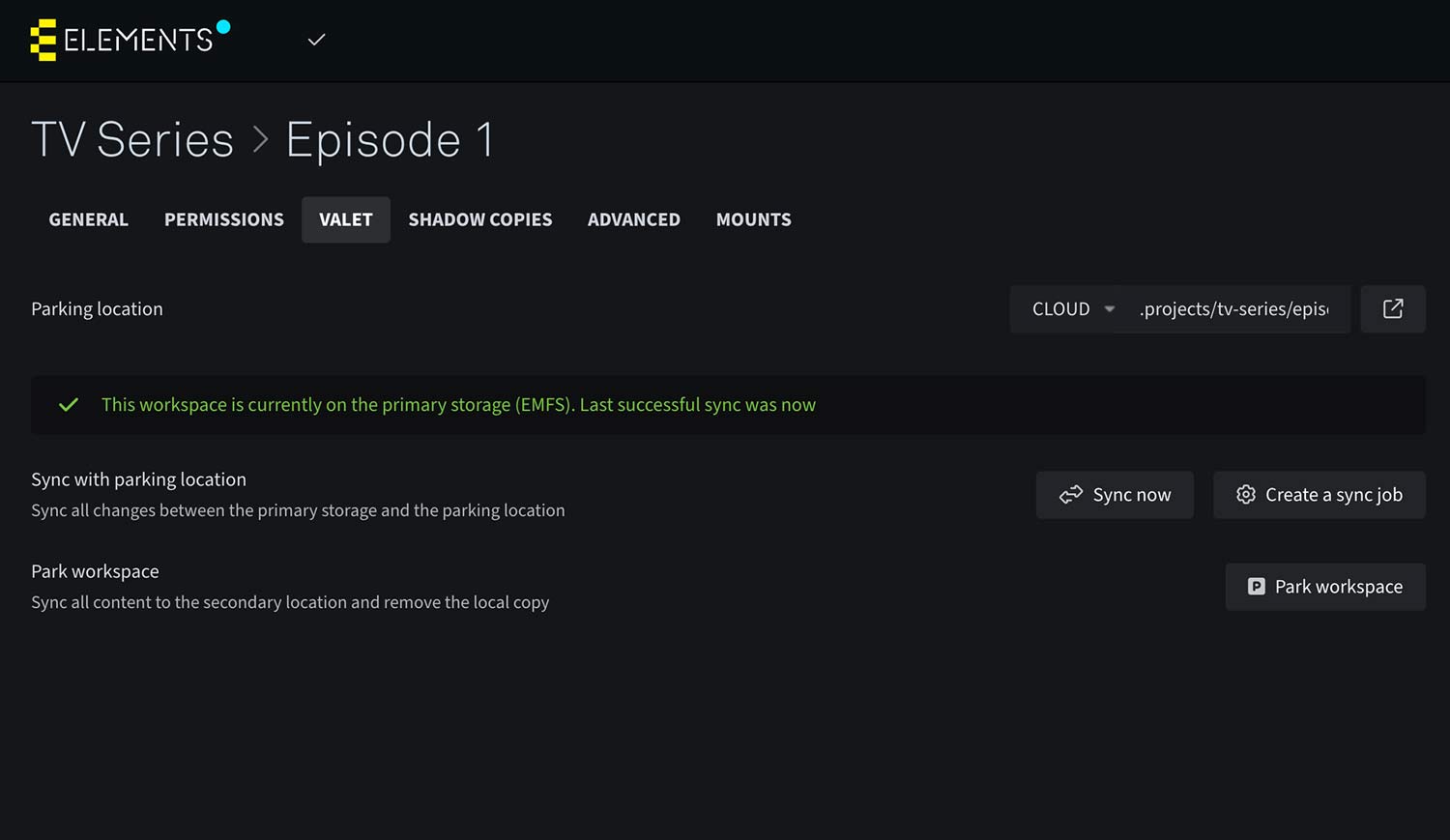
VALET runs scheduled background syncs that continuously mirror your workspaces to a secondary destination – AWS S3, Azure Blob, Backblaze B2, Wasabi, or any connected on-prem volume. Bandwidth throttling keeps it invisible during production hours. When a project is ready to park, one click removes it from primary storage. The parked workspace stays visible in the Media Library: proxies browsable, metadata searchable, permissions intact.
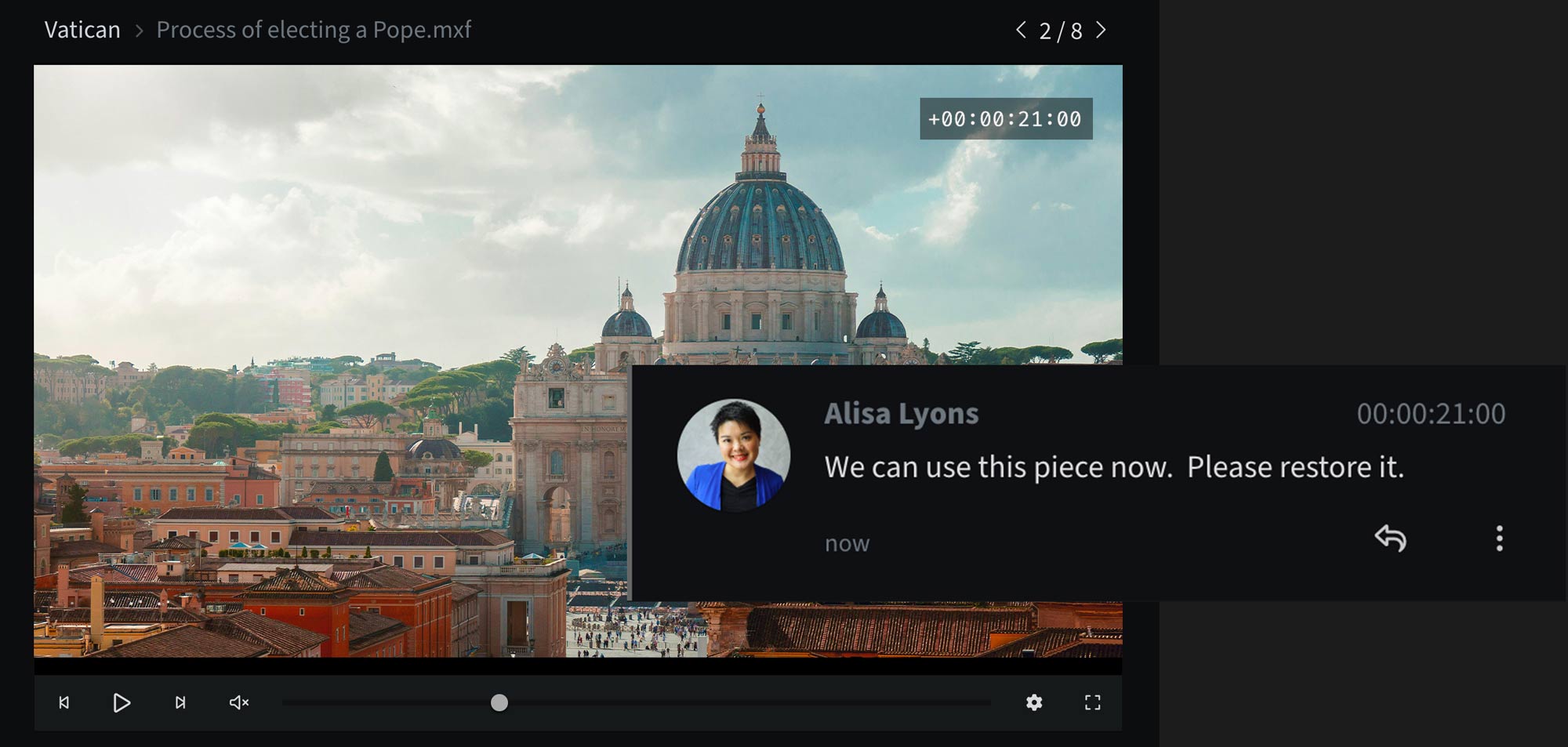
Retrieval is the same one-click operation. The workspace comes back to your editing storage complete, and you pick up exactly where you left off.
- Technical specifics:
- Supports AWS S3, Azure Blob, Backblaze B2, Wasabi, Archiware, and other connected volumes.
- Scheduled sync runs automatically at defined intervals or triggered by workflow state change.
- Configurable bandwidth limit means zero impact on active production.
- Workspace permissions, quotas, and Media Library metadata preserved through the full cycle.
- Force-sync option for immediate offload when you need space now.
- Works on-prem to cloud, cloud to cloud, or on-prem to on-prem.
Protected before you park
There’s a benefit that lands long before you ever click “park.” Because VALET mirrors your active workspaces continuously, every project in production already has a complete copy on the secondary location, usually offsite, often in the cloud.
That means a project never lives in only one place. If something happens to your primary storage, the work isn’t gone. The mirror holds a full, current copy of the workspace, with its structure intact – not a loose pile of files you have to reassemble. And it covers active work, not only delivered masters, so the protection is there throughout production, not just at the end.

To be precise about what this is: a continuous mirror keeps a live, usable second copy of your work in progress. It is not a versioned backup with point-in-time history, and VALET doesn’t pretend to be one. Its job is simpler and runs every day: make sure your active projects always exist in more than one place.
Why not just use a global filesystem?
The fashionable answer to full storage is a global namespace: one virtual filesystem stretched across every location and every cloud, with software deciding where each file physically lives. It’s a powerful idea for large multi-site operations, and it solves a real problem: making the same data reachable from anywhere.
But a global namespace is infrastructure, not workflow. It makes data reachable; it doesn’t manage the project. There’s no Media Library on top, no proxy to browse while the originals sit in the cloud, no workspace permissions that travel with the move, no one-click round trip an editor can run without calling IT.
For facilities that genuinely need data to live in many places at once, a global filesystem and ELEMENTS are complementary, not competing. But if the actual problem is completed projects clogging fast storage, a namespace is a heavy, infrastructure-level answer to a workflow-level question. VALET answers the question directly.
Why not an emulated cloud drive?
The other common answer is an emulated cloud drive i.e. software that makes cloud storage appear as an ordinary local disk. It watches what gets used, quietly moves cold files out to cheaper storage, and leaves a placeholder behind. Double-click the placeholder and the real file downloads back, supposedly without you noticing. It works one file at a time, on guesswork, in the background.
That emulation has a cost that shows up exactly when you don’t want it to. Because the cloud is dressed up as a local disk, an editor can open what looks like a file already on their drive and instead trigger a slow, unbudgeted download mid-session, often with egress charges attached.
VALET operates one level up, at the project, and never puts an editor in that position. Nothing is stubbed and nothing recalls by accident, because parking is deliberate and visible. The boundary is honest: a project is either on your editing storage or it’s parked, and you always know which.
Parking, not archiving
Cold archive retrieval – LTO tape, Glacier deep archive – means initiating a restore process, waiting, and then finding your project in pieces. VALET-parked projects stay connected to ELEMENTS throughout. Proxies remain browsable. The workspace structure is intact on both sides. Retrieval is a single action, not a workflow.
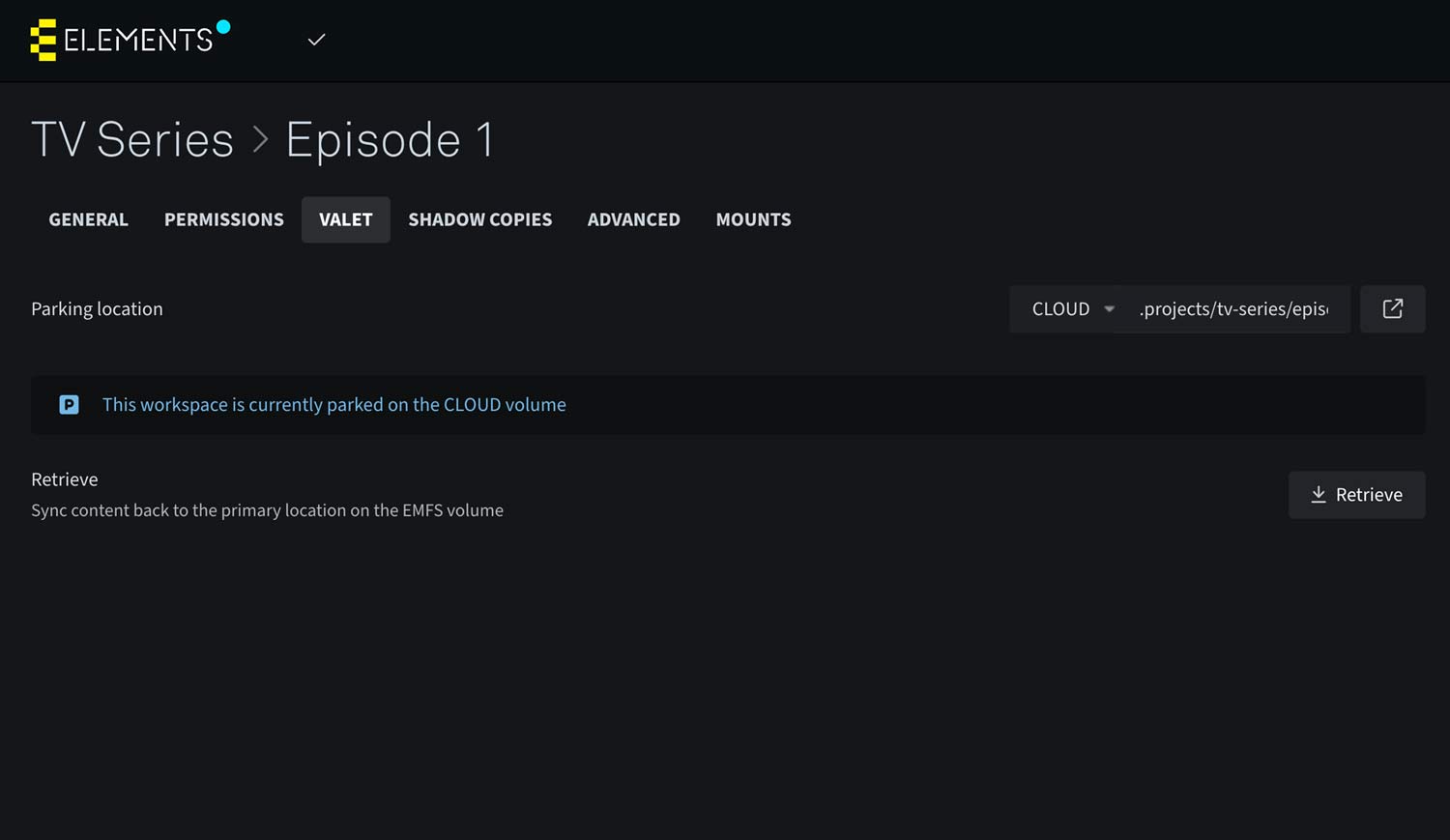
A show gets renewed. A client requests a revision three months after delivery. An asset needs repurposing for a new campaign. The project comes back in one click, ready to edit.
Who runs VALET
Series and episodic facilities rotating multiple shows. Season 1 wraps, VALET parks it while Season 2 goes active. When Season 3 gets greenlit, Season 1 is back on primary storage before the first production meeting.
Commercial and branded content studios with high project turnover – dozens of completed spots and versioned deliverables occupying fast storage months after the job was invoiced and paid.
Post houses delivering to broadcasters and streamers with contractual retention requirements. Keeping project access for 12–24 months after delivery doesn’t require keeping it on your most expensive storage tier.
Hybrid facilities managing a mix of on-prem and cloud infrastructure. VALET moves projects between tiers without any of the manual file management that usually makes tiered storage more trouble than it saves.
The cost case
High-performance SAN and NVMe storage runs roughly 10–20× the cost per terabyte of cloud object storage. A completed 10-episode series occupying SAN capacity for six months after delivery costs significantly more than it would parked in S3 or Backblaze – and the math compounds across every show, every year.
There’s a second cost the alternatives quietly add and VALET avoids: surprise egress. An emulated cloud drive can pull data back the moment someone opens a file, turning a routine double-click into a transfer bill. Because parking and retrieval in VALET are deliberate, scheduled, and visible, the cost of moving data is something you plan and not something that lands in next month’s invoice.
Inside ELEMENTS
VALET is native to the ELEMENTS Automation Engine. The competing approaches are storage layers that need a management and collaboration layer added on top; VALET is part of one already: the Media Library, the permission system, and the automation engine that the rest of the platform runs on.
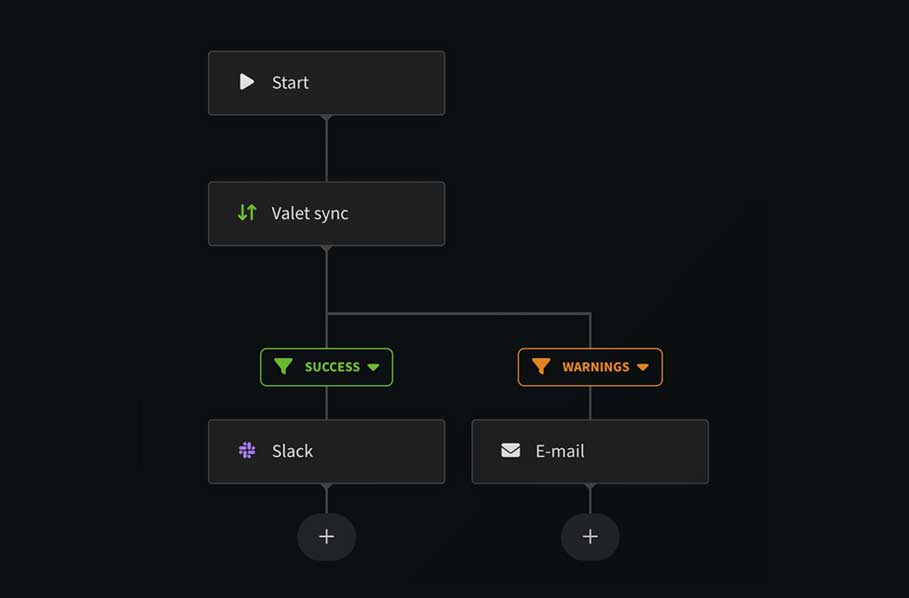
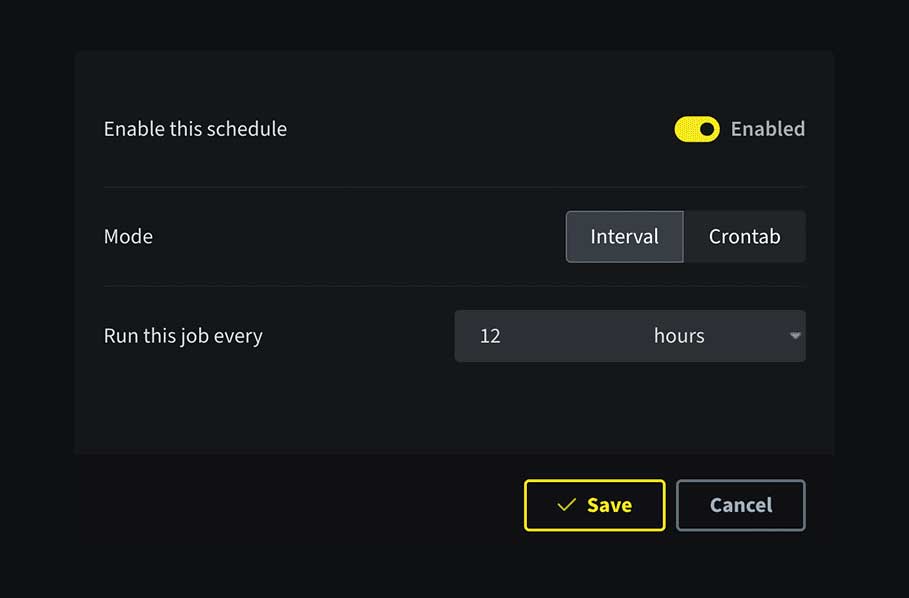
It runs as a scheduled job and chains with other automation steps. For example, triggering automatically when a workflow state marks a project as delivered, then running nightly with bandwidth limits until the workspace is ready to park.
VALET ships alongside new Media Library capabilities, AI integrations, and BLINK high-performance BeeGFS support as part of the ELEMENTS v26.2 release.